Consumer WiFi vs. Enterprise WiFi: What SMBs Need to Know
For many small and mid-sized businesses (SMBs), Wi-Fi is the lifeline that keeps daily operations running—whether that’s processing transactions, supporting remote work, or enabling guest access. But when it’s time to upgrade or expand your network, one big question often comes up:
“Do we really need enterprise WiFi, or will consumer-grade gear do the job?”
The answer depends on how your network is used, the number of people relying on it, and how much downtime your business can afford. Let’s break down the differences.
1. Performance & Coverage
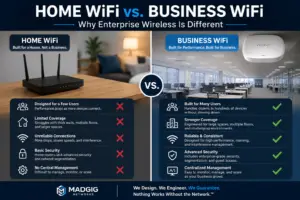
- Consumer Wi-Fi: Designed for homes or very small offices, consumer routers and access points can deliver decent speeds in small spaces—but performance drops quickly when too many devices connect or when the signal has to travel through multiple walls.
- Enterprise Wi-Fi: Built to handle dozens or even hundreds of simultaneous connections, with strong signal coverage across larger areas. Features like Wi-Fi heat mapping ensure there are no dead spots—critical for warehouses, large retail floors, and multi-room office spaces.
2. Security
Consumer Wi-Fi: Typically offers basic WPA2/WPA3 encryption and a single password for all devices. Fine for personal use, but limited for controlling access.
Enterprise Wi-Fi: Comes with advanced security features such as 802.1X authentication, VLAN segmentation, and integration with your company’s directory services. This means you can give staff, guests, and IoT devices separate, secure networks—keeping sensitive data safe.
3. Scalability
Consumer Wi-Fi: Adding more coverage often means daisy-chaining extra routers or using mesh kits, which can create bottlenecks and unpredictable performance.
Enterprise Wi-Fi: Scales effortlessly with centralized controllers or cloud management. Whether you have 5 access points or 50, you can configure, monitor, and troubleshoot them all from a single dashboard.
4. Reliability & Redundancy
Consumer Wi-Fi: If the router fails, the whole network goes down. Firmware updates are manual and often neglected, leaving devices vulnerable.
Enterprise Wi-Fi: Designed for high availability, with options for failover internet connections (like 4G LTE, 5G, or satellite backup) and proactive monitoring. Many enterprise solutions push automatic security updates without service interruptions.
5. Support & Lifecycle
Consumer Wi-Fi: Tech support is often limited to basic troubleshooting scripts, and hardware is typically replaced every 2–3 years.
Enterprise Wi-Fi: Backed by manufacturer warranties, factory-trained engineers, and extended lifecycle support—meaning your investment lasts longer and stays secure.
Why SMBs Should Care
If your business depends on stable, secure connectivity for mission-critical operations, enterprise Wi-Fi isn’t a luxury—it’s a necessity. Consumer gear might seem like a money-saver upfront, but the costs of downtime, data breaches, and frustrated employees or customers can add up fast.
The bottom line:
Under 10 users, low data sensitivity, and minimal growth? A high-end consumer solution might work.
More than 10–15 users, need for security, or future expansion? Enterprise Wi-Fi will pay for itself in performance, reliability, and peace of mind.
How Madgig Networks Helps
At Madgig Networks, we design and deploy enterprise-grade Wi-Fi systems tailored to the needs of SMBs—without the oversized price tag you might expect. From initial site surveys and heat mapping to installation, failover internet, and ongoing management, we make sure your network is always fast, secure, and ready for business.
📞 Contact us today to find out how we can upgrade your network and keep your business connected—no matter what.